Castor Types - Helping you control!

Posted by Kelly Hall on 13th Apr 2026
High quality castors should be fitted to any trolley in operation. The choice of castor you add to your trolley is the absolute most important thing for any of the trolleys we have ever made. Otherwise, it’s like buying a Ferrari and sticking a Toyota Aygo Engine in, it would be silly. This is paramount for safety of users, the load being carried and the environment in which a trolley is being used along with performance, control, rolling resistances, noise levels, damages to facilities.
Castors vary in sizes and choosing the correct size or knowing what to look for when purchasing a trolley is important. Typically, the material of the castor and the size determines the capacity, the larger diameter, the higher carrying capacity.
Castor placement is also an important factor when looking for a trolley or in the design process. Castors should be fitted to the end of the trolley to allow for best load control, while minimising operator input of the trolley. What Wheel and Castor Configurations Should I Use On My Trolley?
Castors fitted should be easily replaceable when required. Whilst you might not think about this on first purchase it should be considered for future maintenance and to ensure that the trolley does not become a discarded one simply due to a castor. With so many imports into the UK rarely we see castors with an EU specification, you would be surprised at who and how often this goes wrong. Where can I buy wheels for my MacAllister Sack Truck?
Castors typically come on a plate with swivel, fixed or braked properties. Castors, can also be in bolt hole style which means that the castor is fitted directly into a tube or box steel with the use of an expander bolt, or fixing spine. The bolt hole option only offers swivel castors or swivel with brake, you cannot get a fixed bolt hole castor.
We understand that it can be hard with so many options available to you. Below is a guide that we hope will help with your decision.
Polyprop Centre Castor with Black Rubber Tyre The standard, entry level castor option. It won’t win on any awards but a great all-rounder for flat terrain and the most common wheel you will find on the market. If the ground is hard under foot, it works.
Upside : Lightweight, low cost, easily available and hardwearing
Downside : Can be a little noisy, mass manufactured with little Quality Assurance, can fish tail due to lack of QA and often low quality head bearings due to cheap wheel bearings used.
Castor with Grey Non Marking Tyre – Grey Non-Marking Properties at a modest price tag. The same great, all-rounder rubber tyre but finished in grey and won’t leaves scuffs on floor. Perfect utility wheel for hospital schools or where facilities have had a bit of money spent on them.
Upside : Lightweight, low cost easily available and hardwearing
Downside : Can be a little noisy, mass manufactured with little Quality Assurance, can fish tail due to lack of QA and often low quality head bearings due to cheap wheel bearings used.
Steel Centre Castor with Black Rubber Tyre Heavier capacity due to the steel centre.
Upside : Lightweight, low cost, easily available and hardwearing
Downside : Can be a little noisy, mass manufactured with little Quality Assurance, can fish tail due to lack of QA and often low quality head bearings due to cheap wheel bearings used.
Aluminium Centre Castor with Polyurethane Tyre - Heavy Duty – The don! Quiet, soft, pretty, hard wearing, the highest of capacities, low rolling resistance, indestructible!
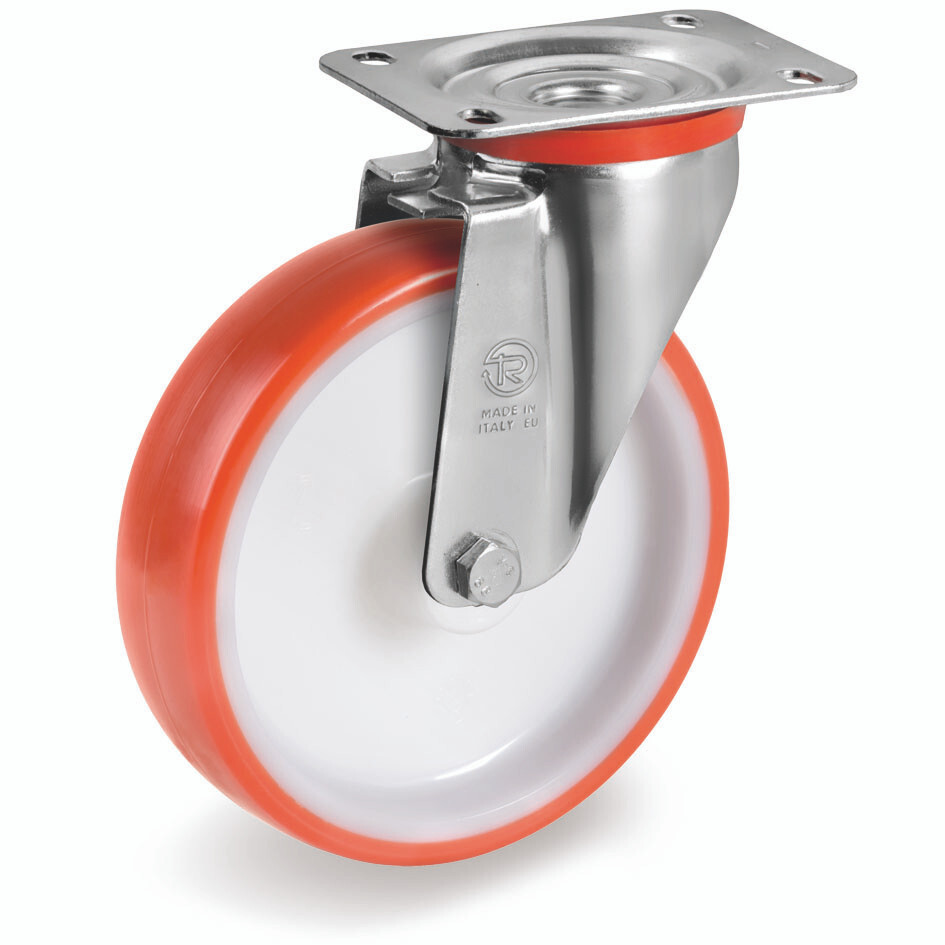
Polymide Centre, Elastic Polyurethane Rubber Tyre – Our favourite, versatile and good capacity. Non Marking, smooth ride. Softer compound to help with rougher terrain flooring. Low rolling resistance and ability to go over rougher ground due to the elastics within the rubber. We like to call them springy!
Nylon Centre Castor Polyurethane Tyre–Non Marking. Smooth ride. Very low rolling resistance, meaning this option fitted to a trolley will not need much push to get going. Thanks to the polyurethane tyre this castor is very hard wearing but can be a little noisy.
Nylon Wheel Castor- makes a heavy load feel lighter than they are. The initial force required to move a trolley with these fitted is reduced meaning less strain on the operator. Very hard wearing nylon centre means that they will outlast most rubber tyres.
Pneumatic Air-filled Trolley Castor – Cannot be braked due to the damage caused to the tyre. Offer a softer ride. Correct tyre pressure must be maintained meaning this is very dependant on maintenance schedules within your setting.
Below the table will hopefully assist with your search to find the perfect castor. 1 is poor, 5 is brilliant!
| Castor Type | Rolling Resistance | Quiet | Smooth Rolling | Non Marking | Maintenance | Operator Control | |
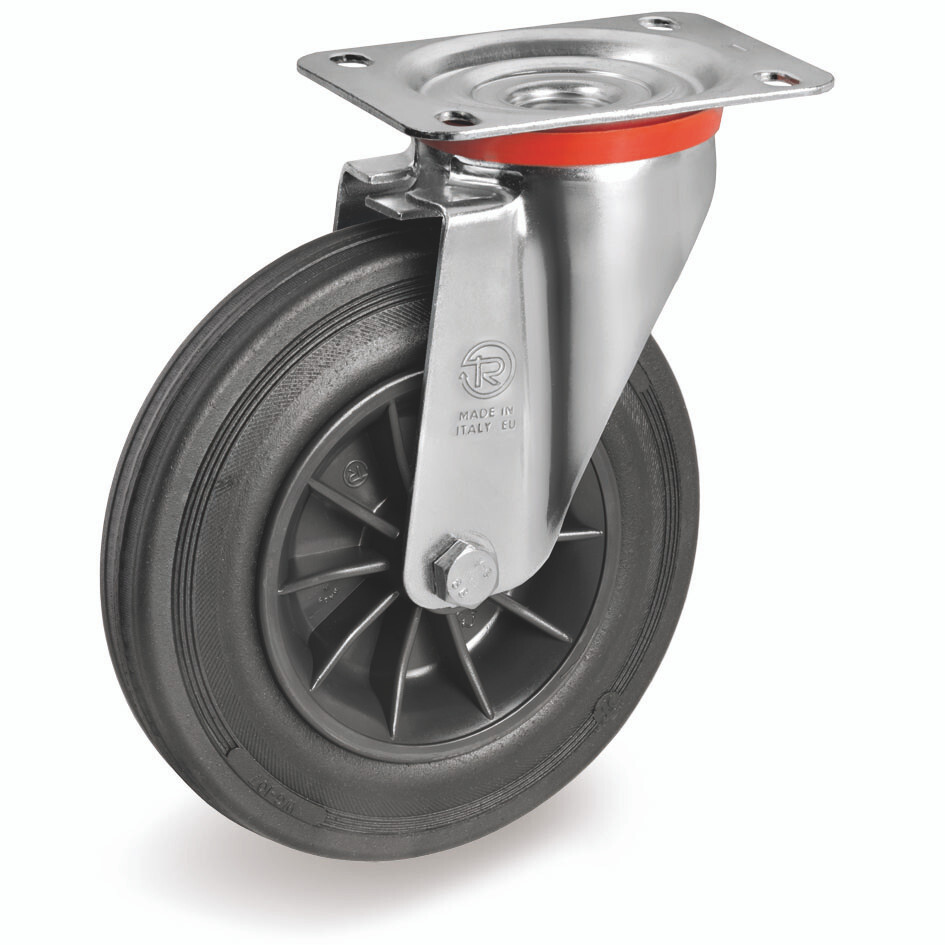 |
Black Crumb Rubber | 2.5 | 3 | 3 | 1 | 2 | 3 |
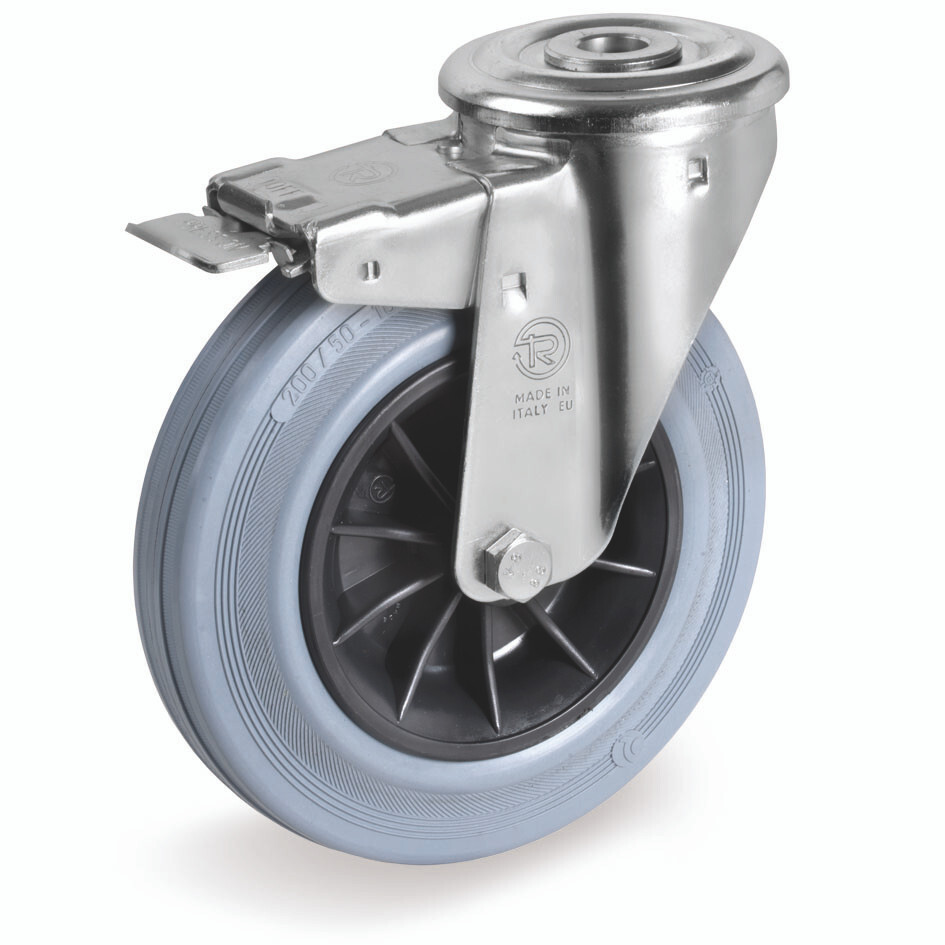 |
Grey Non Marking | 2.5 | 3 | 3 | 5 | 3 | 3 |
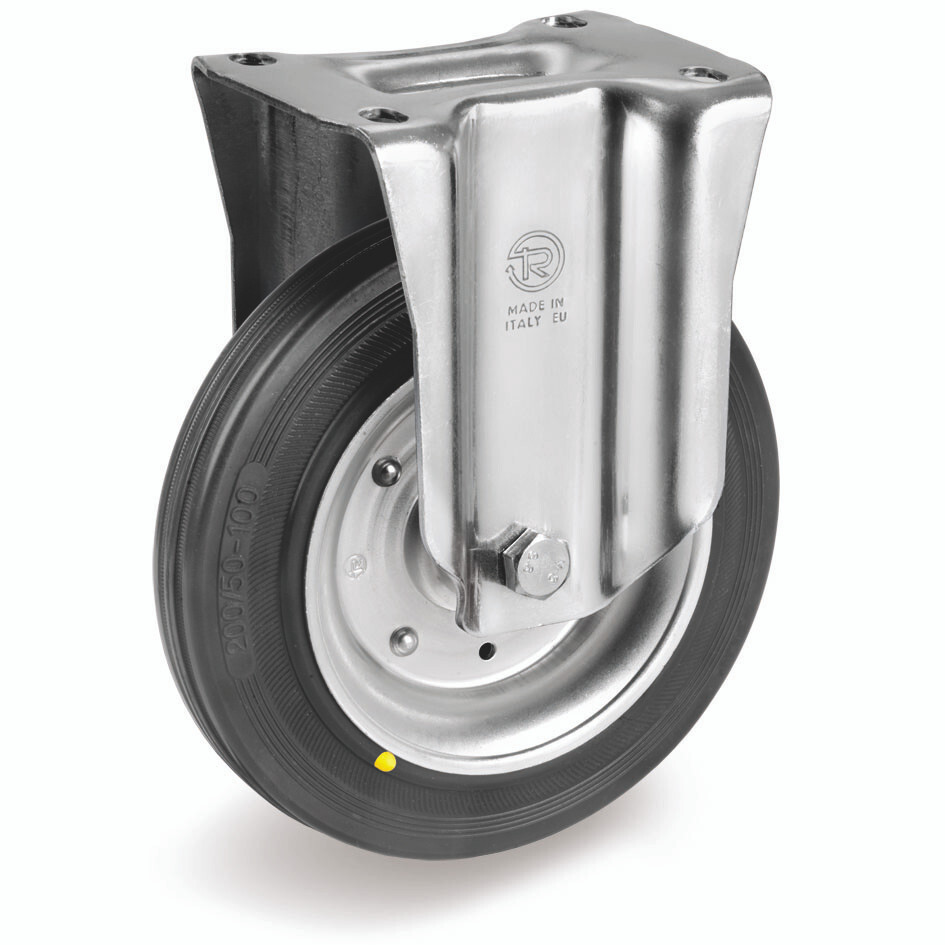 |
Steel Centred | 2.5 | 3 | 3 | 1 | 3 | 3 |
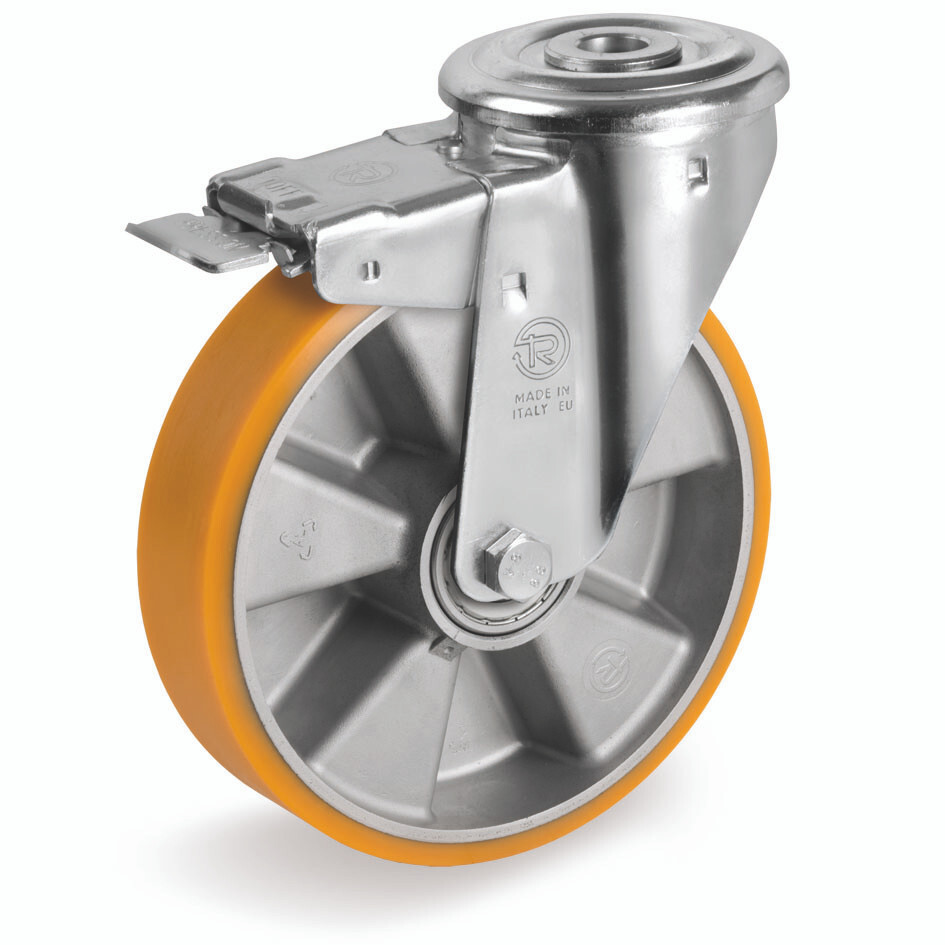 |
Aluminium Centre with Polyurethane Tyre | 5 | 4 | 5 | 5 | 5 | 5 |
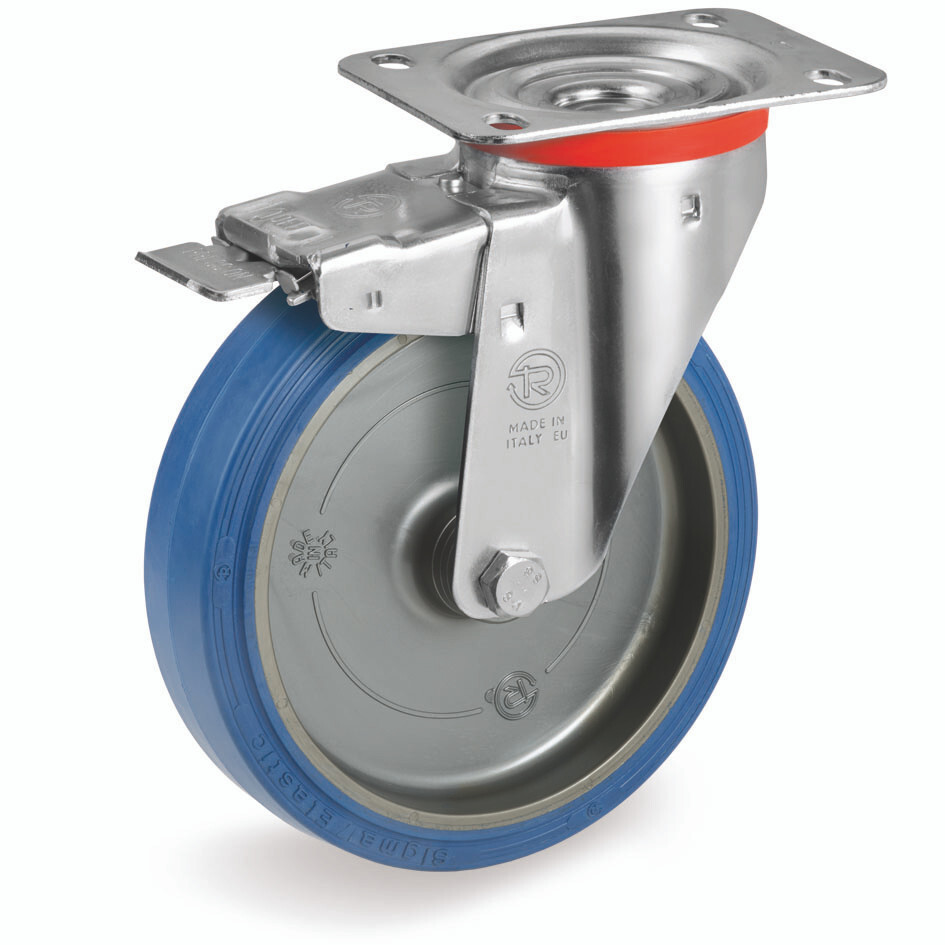 |
Polymide Centre, Elastic Polyurethane Rubber Tyre | 4 | 5 | 5 | 5 | 4 | 5 |
 |
Nylon Centred with Polyurethane Tyre | 4 | 2 | 3 | 5 | 4 | 4 |
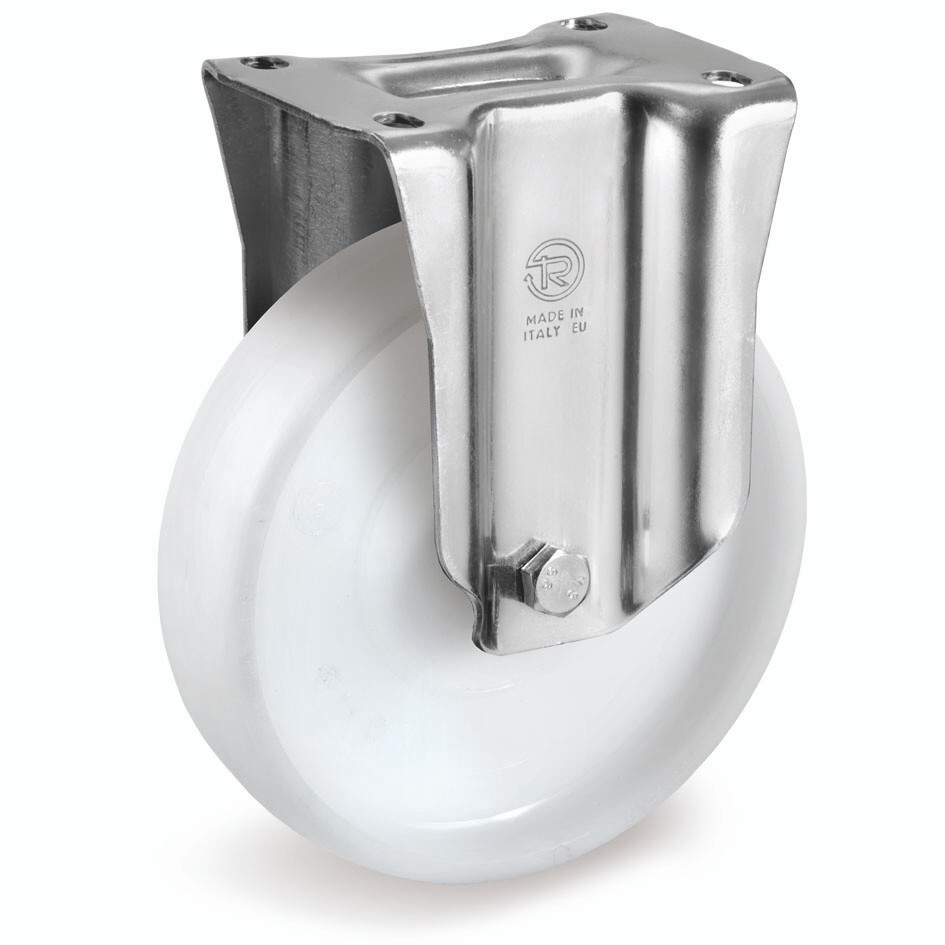 |
Nylon Wheel | 5 | 1 | 2 | 3 | 5 | 3 |
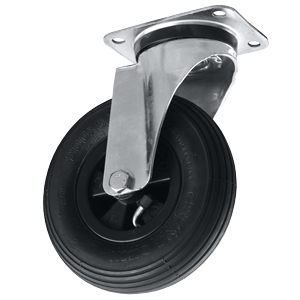 |
Pneumatic | 1 | 5 | 4 | 1 | 1 | 3 |