How to Change Sack Truck Wheels (and Why Regular Maintenance Matters)
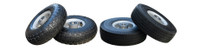
Posted by Kelly Hall on 26th Jan 2026
Sack trucks, also known as hand trucks or barrows, are essential tools when moving items that are heavy, awkward or in bulk. They’re designed to move heavy loads safely and with minimal manual inputy, but worn or damaged wheels can quickly turn a simple task into a safety risk.
Changing sack truck wheels is a straightforward maintenance job, and doing it at the right time is critical for performance, safety, operators effort and equipment longevity.
Why Sack Truck Wheels Need Attention
Sack truck wheels endure constant stress, including:
- Heavy loads
- Uneven surfaces
- Impacts from kerbs, steps, and thresholds
- Exposure to dirt, moisture, and debris
Over time, this leads to flat spots, cracked tyres, seized bearings, or excessive wobble from wear in the bearing. Ignoring these signs can cause instability, strain on operators, and premature damage to the frame of the sack truck itself.
Tools and Materials You’ll Need
Before starting, make sure you have replacement wheels (correct diameter, width, and load rating) along with replacement washers and split pins and of course, the correct PPE.
Step-by-Step: How to Change Sack Truck Wheels
- Secure the Sack Truck
Lay the sack truck flat on the ground so that it cannot shift during wheel replacement.
2. Remove the Wheel Fixings
Most sack truck wheels are mounted on a central axle bolt and secured with washers and a split pin.
- Use a pair of pliers to remove the split pin carefully as they do have sharp ends.
- Remove washers or spacers and keep them safe if they are able to be used again.
- Slide the wheel off the axle
- Inspect the Axle and Components
This is a crucial maintenance step that’s often overlooked.
Check the axle for:
- Wear or scoring
- Rust or debris
- Bending or damage. Pay particular interest to where the axle is welded to the frame as this is the part that bears all the weight.
Also inspect washers, spacers, and bearings. Replacing a wheel without addressing underlying wear can lead to repeated failures.
- Fit the New Wheel
Slide the new wheel onto the axle, ensuring it sits squarely. Reinstall spacers and washers in the same order they were removed.
Secure the wheel by adding a new split pin to the hole within the axle. The wheel should rotate freely without side-to-side movement and without the wheels being slowed because the washers are too tight.
Apply grease if the wheel or axle design requires it, either by manually greasing the axle or via a grease nipple if provided.
- Test Before Use
Stand the sack truck upright and roll it forward and backward. Check for:
- Smooth rotation
- Proper alignment
- No wobble or grinding noises
Only return the sack truck to service once you’re confident it’s operating correctly.
For additional visuals please view our quick video, Sack Truck Wheel Removal and Fitting
The Importance of Regular Service and Maintenance
Changing sack truck wheels shouldn’t be a reactive task—it should be part of a planned maintenance routine.
Regular servicing helps:
- Reduce manual handling injuries
- Improve load control and stability
- Extend the life of the sack truck
- Prevent costly downtime and emergency repairs
Worn wheels increase resistance, forcing operators to exert more effort and placing unnecessary strain on the equipment and the user.
Use our checklist to aid your workplace, Safety-Check-Sheet_Wheels.pdf
Maintenance Tips to Keep Sack Trucks in Top Condition
- Inspect wheels regularly for wear or damage
- Replace wheels in pairs to maintain balance
- Keep axles clean and lubricated
- Use the correct wheel type for the environment (solid, pneumatic, puncture-proof)
- Never exceed the sack truck’s load rating
Changing sack truck wheels is a simple yet essential maintenance task that directly impacts safety, efficiency, and equipment lifespan. Proactive service and routine inspections ensure your sack trucks remain reliable tools rather than hidden hazards.
A well-maintained sack truck doesn’t just move loads—it protects the people using it.