If the Trolley is Difficult to Move – What Should You Do?
24th Aug 2026
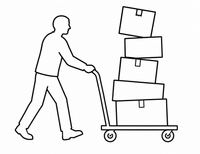
Trolleys are designed to make work easier, not harder. When used correctly, they reduce the need for lifting and help prevent injuries. However, if a trolley becomes difficult to move, it can quickly turn into a serious manual handling risk.
At Handle-iT, we regularly see injuries caused not by lifting, but by pushing and pulling equipment that isn’t fit for use. Knowing what to do when a trolley is hard to move is essential for protecting your health and staying compliant with manual handling regulations.
Stop and Assess the Situation
The most important action is also the simplest: STOP!
If a trolley feels unusually heavy, stiff, or difficult to control, do not force it. Continuing to push or pull increases the risk of:
- Back and shoulder injuries
- Muscle strains
- Slips, trips, and loss of control
- Sudden jolts that can cause long-term damage
Take a moment to assess why the trolley is difficult to move.
Check the Load
One of the most common causes of resistance is overloading.
Ask yourself:
- Is the trolley carrying more weight than it should?
- Is the load uneven or unstable?
- Has the load shifted during use?
If possible, reduce the load by removing items or splitting it into smaller trips. A lighter, balanced trolley is always safer than one overloaded journey.
Inspect the Wheels and Condition
Damaged or poorly maintained trolleys are a major manual handling hazard.
Look for:
- Jammed, worn, or broken wheels
- Debris caught in castors
- Flat spots or wheels that don’t rotate freely
- Bent frames or loose components
If the trolley is faulty, do not use it. Report the issue and ensure it is repaired or replaced before being put back into service.
Check the Route
Sometimes the issue isn’t the trolley, but the environment.
Consider:
- Uneven or damaged flooring
- Ramps that are too steep
- Wet, oily, or slippery surfaces
- Obstacles such as cables, packaging, or thresholds
If the route isn’t safe, find an alternative path or delay the task until the area is made suitable.
Get Help – Don’t Struggle Alone
If the trolley is still difficult to move after checks, ask for assistance.
This may involve:
- A second person to help guide or push
- Using a powered handling aid instead? Electric Powered Trolleys - HI-POW
- Changing the handling method entirely
Struggling alone is one of the most common causes of manual handling injuries.
Use Correct Pushing and Pulling Techniques
When a trolley is safe to use, good technique still matters:
- Push rather than pull where possible
- Keep hands at waist height
- Maintain good posture with elbows close to your body
- Use smooth, controlled movements
If you feel strain at any point, stop immediately.
Report and Learn
Any trolley that is difficult to move should be reported, even if no injury occurs. Near misses are valuable warning signs and help prevent future accidents.
Regular manual handling training ensures staff:
- Recognise early risk signs
- Understand equipment limits
- Know when to stop and escalate
A trolley that’s hard to move is a clear signal that something isn’t right.
At Handle-iT, we help organisations reduce injuries through ergonomic trolleys, risk assessments and maintenance checklists.